
Cincinnati is home to a wide range of houses, from historic properties and established neighborhoods to newer construction. Many older homes were built when families used far less electricity than they do today.
Over the years, homeowners may add appliances, remodel kitchens and bathrooms, finish basements, install new lighting, add HVAC equipment, or simply accumulate more electronics and electrical devices.
That doesn’t automatically mean an older home has an unsafe electrical system. However, the electrical system may be worth a closer look to make sure it can safely and reliably support the way the home is being used today.
So what electrical problems are common in older Cincinnati homes, and what should homeowners know before assuming something needs to be replaced?
Lipps Electric has been serving Greater Cincinnati homeowners since 1986, helping homeowners address electrical repairs, upgrades, safety concerns, and changing electrical needs in homes of all ages.
Why Older Homes Can Have Different Electrical Needs
Older homes can have different electrical needs simply because the way we use electricity has changed.
Today’s homes may rely on:
- Multiple televisions and computers
- Home offices
- Smart-home technology
- Large kitchen appliances
- HVAC equipment
- Electric dryers
- EV chargers
- Home entertainment systems
- Multiple charging devices
- Finished basements and additions
An electrical system that was adequate when a home was built may not have been designed around today’s level of electrical demand.
That doesn’t mean an older electrical system automatically needs to be replaced. The condition of the system, previous modifications, current electrical demand, and the home’s future plans all play a role in determining whether repairs or upgrades are appropriate.
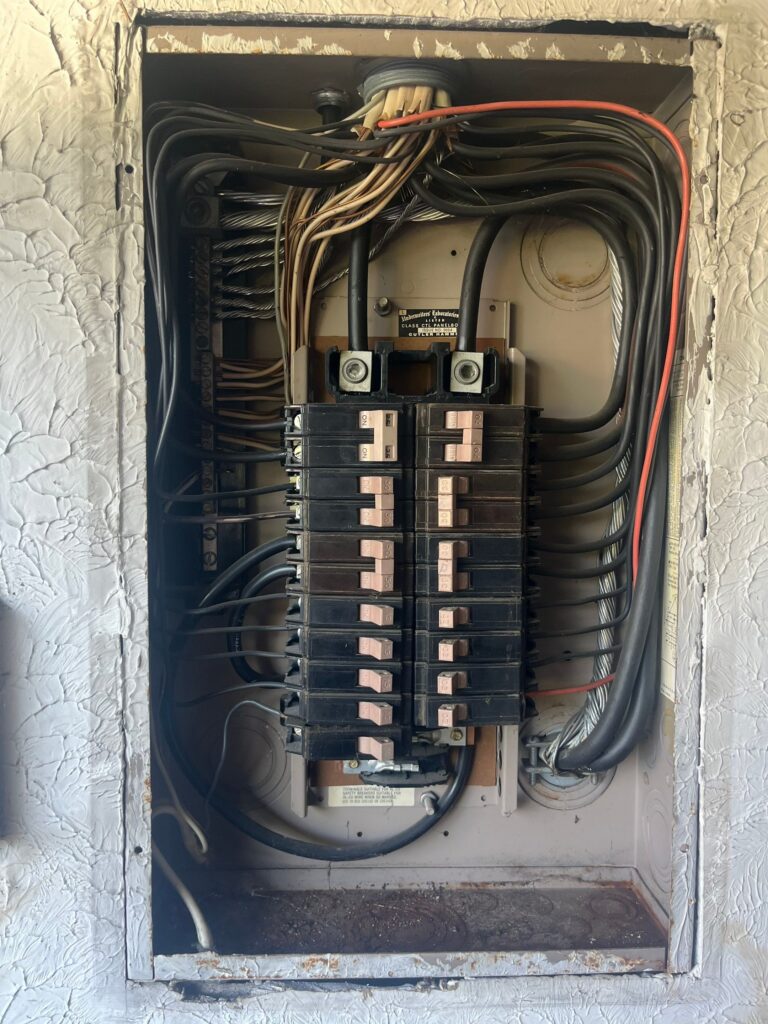
1. Aging or Outdated Electrical Panels
TYour electrical panel is the central distribution point for your home’s electrical system. It directs electricity to the circuits throughout your house and helps protect those circuits from overloads.
Older electrical panels are not automatically unsafe, but an aging panel may have:
- Limited breaker space
- Outdated equipment
- Signs of corrosion or overheating
- Insufficient capacity for newer electrical loads
- Components that require professional evaluation
For example, Lipps Electric recently completed a 200-amp electrical panel upgrade in Delhi Township, where an older panel was evaluated and upgraded to better support the home’s electrical needs.
The age of an electrical panel alone does not determine whether it needs to be replaced. A professional evaluation can help determine whether the panel is functioning properly and whether it has the capacity to support the home’s current and planned electrical needs.
If you’re planning to add major electrical equipment, remodel your home, or you’re unsure about the condition of your panel, an electrician can help you understand your options.
2. Not Enough Circuits for Modern Electrical Demand
Older homes may not have been designed for the number of electrical devices families use today.
Frequent breaker trips can sometimes indicate that circuits are being asked to handle more electrical demand than they were designed for.
Other signs that your home may need additional electrical capacity include:
- Frequently tripping circuit breakers
- Relying heavily on extension cords
- Limited outlets in remodeled spaces
- Adding major appliances without adding appropriate circuits
- Needing to unplug one appliance to use another
The solution isn’t always a larger electrical panel. Depending on the home, the issue could involve circuit configuration, wiring, available capacity, or the need for additional dedicated circuits.
A professional evaluation can help determine what’s actually causing the problem.
3. Older Wiring or Previous Electrical Modifications
Many older homes have had electrical work completed over the years.
A homeowner may not know exactly what changes were made by previous owners, particularly if the home has undergone renovations, additions, or remodeling projects.
Electrical systems can include:
- Original wiring
- Updated wiring in remodeled areas
- New circuits added over time
- Wiring extended to accommodate additions
- Previous electrical modifications
The presence of older wiring does not automatically mean the entire home needs to be rewired. However, if you’re unsure about the age or condition of your home’s wiring, a professional evaluation can help you understand what you’re working with.
4. Two-Prong Outlets or Limited Grounding
Some older Cincinnati homes still have two-prong electrical outlets.
Two-prong outlets can be an indication that portions of an older electrical system were installed before modern grounding practices became common.
If your home has two-prong outlets, don’t assume that simply replacing the outlet itself will solve the issue. The existing wiring and grounding system should be evaluated to determine what options are appropriate for the home.
A licensed electrician can evaluate the existing electrical system and recommend the appropriate solution.
5. Missing or Outdated GFCI Protection
Ground-fault circuit interrupter, or GFCI, protection is an important safety feature in areas where electricity and moisture may come into contact.
GFCI protection is commonly used around areas such as:
- Bathrooms
- Kitchens
- Garages
- Outdoor receptacles
- Laundry areas
- Unfinished basements
If an older home hasn’t been electrically updated in many years, homeowners may not know whether appropriate GFCI protection is present or functioning properly.
If you’re unsure whether your outlets have appropriate protection, a qualified electrician can evaluate them and explain your options.
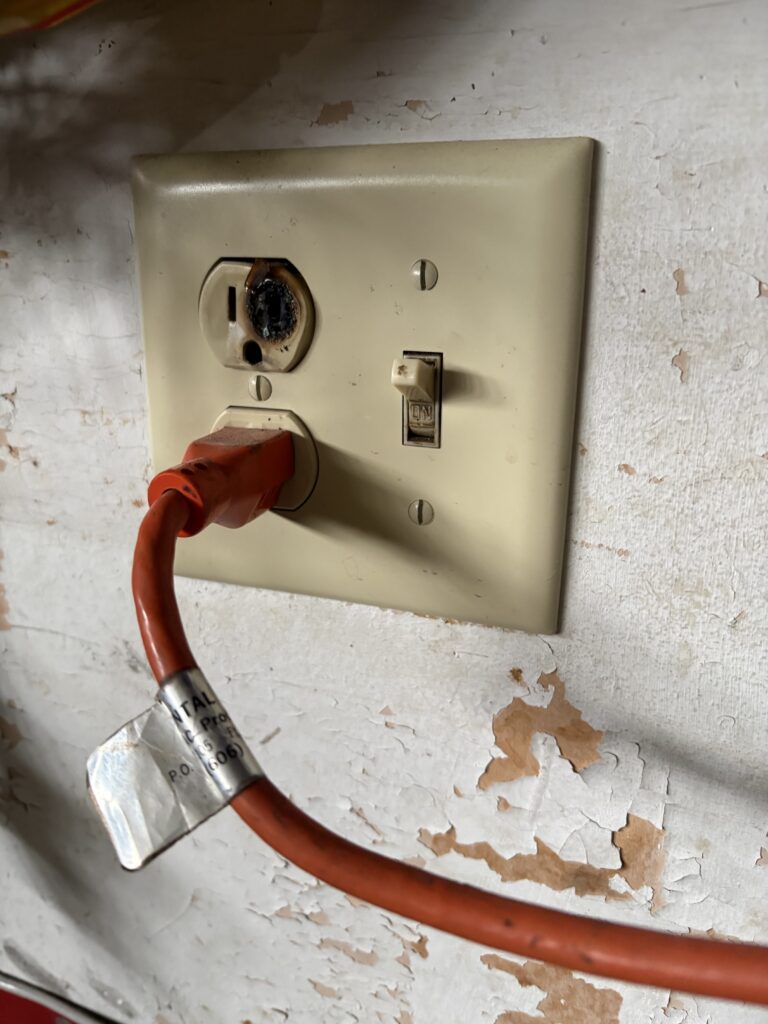
6. Warm, Discolored, or Damaged Outlets and Switches
Electrical outlets and switches should not be hot, burned, melted, cracked, or noticeably discolored.
Other warning signs include:
- Buzzing or crackling
- Burning smells
- Sparks
- Loose receptacles
- Flickering when something is plugged in
- Visible signs of overheating
A burned or discolored outlet can be a sign of an electrical problem that needs professional attention.
⚠️ If an outlet is hot, burned, smoking, sparking, or producing a burning smell, stop using it and have it evaluated by a qualified electrician.
Do not attempt to diagnose or repair damaged electrical equipment yourself.
7. Extension Cords Becoming Permanent Solutions
Extension cords can be useful for temporary situations, but they should not become a permanent substitute for properly installed electrical outlets or circuits.
If your home relies heavily on extension cords or power strips to operate everyday appliances and electronics, it may be worth determining why.
You may need additional outlets, dedicated circuits, or another electrical solution based on the layout and electrical needs of your home.
For more information about preparing your electrical system for fall, read our Cincinnati Homeowner’s Guide to Preparing Your Electrical System for Fall.
8. Electrical Problems After Home Renovations
Renovating an older home can change its electrical requirements.
A kitchen remodel, basement finish, bathroom renovation, home addition, or new HVAC system can add significant electrical demand.
New electrical needs may include:
- Additional lighting
- New outlets
- Dedicated appliance circuits
- HVAC equipment
- Electric appliances
- EV chargers
- Home offices
- Finished basements
A home renovation can change the electrical needs of a property even if the existing electrical system was working properly before the project.
Before adding major electrical loads, it’s important to understand whether the existing electrical system can support them safely and reliably.
Electrical Concerns in Greater Cincinnati Homes
Cincinnati has a large mix of older homes, historic properties, and established neighborhoods. From older West Side communities to historic neighborhoods closer to downtown and established suburban communities throughout Greater Cincinnati, homeowners may be maintaining electrical systems that were installed or modified decades ago.
Homes in Westwood, Delhi Township, Hyde Park, Mt. Lookout, White Oak, Bridgetown, Green Township, Anderson Township, and other established Cincinnati-area communities can vary significantly in age, construction, and electrical history.
That matters because an older home may have:
- Original electrical wiring alongside newer wiring
- Electrical additions from previous renovations
- Older outlets or switches
- Limited circuits for today’s electrical demand
- An older electrical panel
- Finished spaces or additions that changed the home’s electrical requirements
- Newer appliances and technology connected to an older electrical system
For homeowners in these communities, the question isn’t simply “How old is my house?”
It’s:
“Does my home’s electrical system support the way we use the home today?”
That distinction is important. An older Cincinnati home does not automatically need rewiring, a new electrical panel, or other major upgrades. The condition of the electrical system and the way it has been modified over time are much more important than the home’s age alone.
Do Older Homes Automatically Need an Electrical Inspection?
No. The age of your home alone does not determine whether an electrical inspection or upgrade is necessary.
The condition of the electrical system, previous renovations, electrical demand, visible warning signs, and future plans for the home all matter.
A professional electrical evaluation may be helpful if:
- You recently purchased an older home
- You’re planning a major renovation
- You’re adding major electrical equipment
- Your breakers frequently trip
- Your lights flicker
- Your outlets are warm or discolored
- You notice buzzing, crackling, or burning smells
- You’re unsure about the age or condition of your electrical system
If everything in your home appears to be working properly, that’s a good thing. An inspection does not automatically mean you’ll be told that something needs to be replaced.
What Should a Cincinnati Homeowner Do If They’re Concerned?
If you’re concerned about your home’s electrical system:
1. Don’t attempt electrical repairs yourself.
Electrical systems can present serious safety hazards when improperly handled.
2. Stop using visibly damaged equipment.
If an outlet, switch, cord, or other electrical component is burned, damaged, hot, or producing unusual smells or sounds, stop using it and have it evaluated.
3. Don’t repeatedly reset a breaker that keeps tripping.
A repeatedly tripping breaker can indicate an underlying electrical issue.
4. Don’t assume your entire electrical system needs to be replaced.
A specific electrical concern may be addressed with a repair, additional circuit, equipment upgrade, or another targeted solution.
5. Have a qualified electrician evaluate the concern.
A professional can help determine whether you’re dealing with a repair, circuit issue, equipment upgrade, or something that does not require further work.
Why Cincinnati’s Older Homes May Have Different Electrical Needs
Cincinnati’s housing stock includes homes built across many different periods, which means electrical systems can vary significantly from one property to another.
A homeowner in an older Westwood, Delhi, Hyde Park, Mt. Lookout, or other established Cincinnati neighborhood may be living in a home that has had several generations of electrical work—from original construction to additions, remodels, panel changes, new circuits, and upgrades for modern appliances.
That history matters.
Two homes of the same age can have completely different electrical systems. One may have been extensively updated over the years, while another may still have much of its original electrical infrastructure.
That’s why a home’s age is a starting point—not a diagnosis.
A professional evaluation can help determine what condition the electrical system is actually in and whether anything needs attention.
How Lipps Electric Helps Cincinnati Homeowners
Lipps Electric has been serving Greater Cincinnati homeowners since 1986. Our team works on homes of all ages, helping homeowners address electrical repairs, upgrades, safety concerns, and changing electrical needs.
Our residential electrical services include:
- Electrical repairs and troubleshooting
- Electrical panel and circuit breaker services
- Electrical safety inspections
- Outlets and switches
- Lighting
- Surge protection
- EV charger installation
- Generator installation
- New circuits and electrical upgrades
Our goal is to help homeowners understand their electrical systems and make informed decisions about what comes next.
Our job isn’t to sell you an upgrade you don’t need. It’s to help you understand your electrical system and make an informed decision about what comes next.
September Safe Home Fall Check
Is Your Home Ready for Fall?
September is a good time to think beyond seasonal decorating and take a look at the electrical systems your family relies on every day.
If your home is older, you’ve recently renovated, you’ve added major electrical equipment, or you’ve simply never had the electrical system professionally evaluated, a Visual Electrical Safety Inspection can give you a clearer picture of what’s going on.
September Offer
$99 Visual Electrical Safety Inspection
+ FREE Panel Tune-Up ($299 value)
We’ll explain what we find and provide options and pricing before any additional work is performed.
No surprises. No pressure. Just informed choices.
Schedule Your Visual Electrical Safety Inspection
📞 513-471-7023
Contact us.
Are older Cincinnati homes more likely to have electrical problems?
Older homes can have different electrical needs because their systems may have been designed around lower electrical demand. However, age alone doesn’t mean a home has an unsafe electrical system. The condition, maintenance, modifications, and current electrical demand all matter.
How do I know if my older home needs an electrical inspection?
Warning signs such as flickering lights, frequently tripping breakers, warm or discolored outlets, buzzing sounds, damaged electrical equipment, or frequent use of extension cords can be reasons to have the system evaluated. An inspection may also be helpful after buying an older home or completing a major renovation.
Does an old electrical panel automatically need to be replaced?
No. An older panel does not automatically need replacement. A licensed electrician can evaluate its condition, capacity, available circuit space, and the home’s current and planned electrical needs.
Can I add modern appliances to an older Cincinnati home?
Often, yes, but the electrical system may need to be evaluated first. Appliances and equipment such as EV chargers, electric dryers, HVAC systems, hot tubs, and major kitchen appliances can add significant electrical demand.